Powered by LLMs, Cardiverse offers one-stop solution for card game prototyping: ideation, code development, and AI gameplay.
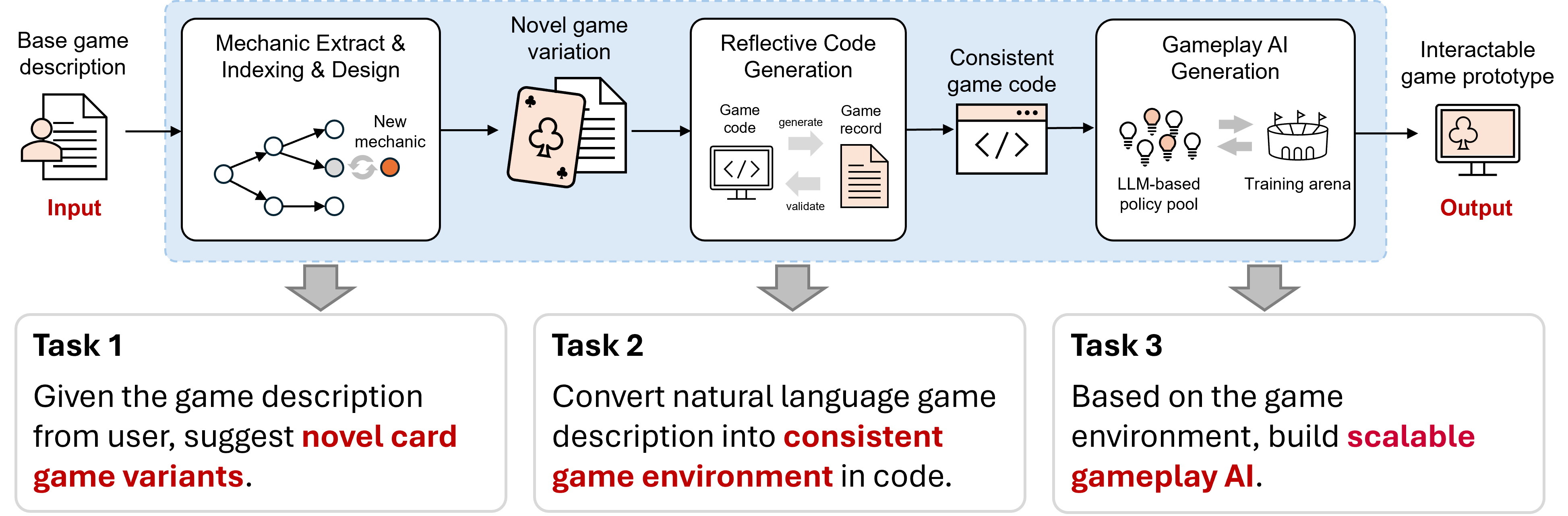
The prototyping of computer games, particularly card games, requires extensive human effort in creative ideation and gameplay evaluation. Recent advances in Large Language Models (LLMs) offer opportunities to automate and streamline these processes. However, it remains challenging for LLMs to design novel game mechanics beyond existing databases, generate consistent gameplay environments, and develop scalable gameplay AI for large-scale evaluations. This paper addresses these challenges by introducing a comprehensive automated card game prototyping framework. The approach highlights a graph-based indexing method for generating novel game variations, an LLM-driven system for consistent game code generation validated by gameplay records, and a gameplay AI constructing method that uses an ensemble of LLM-generated action-value functions optimized through self-play. These contributions aim to accelerate card game prototyping, reduce human labor, and lower barriers to entry for game developers.
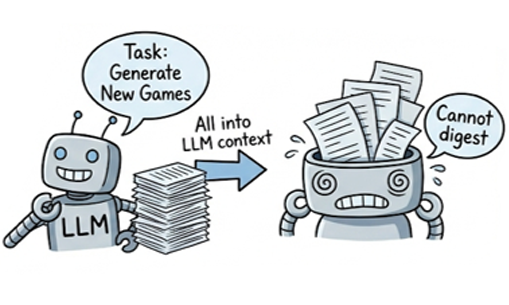
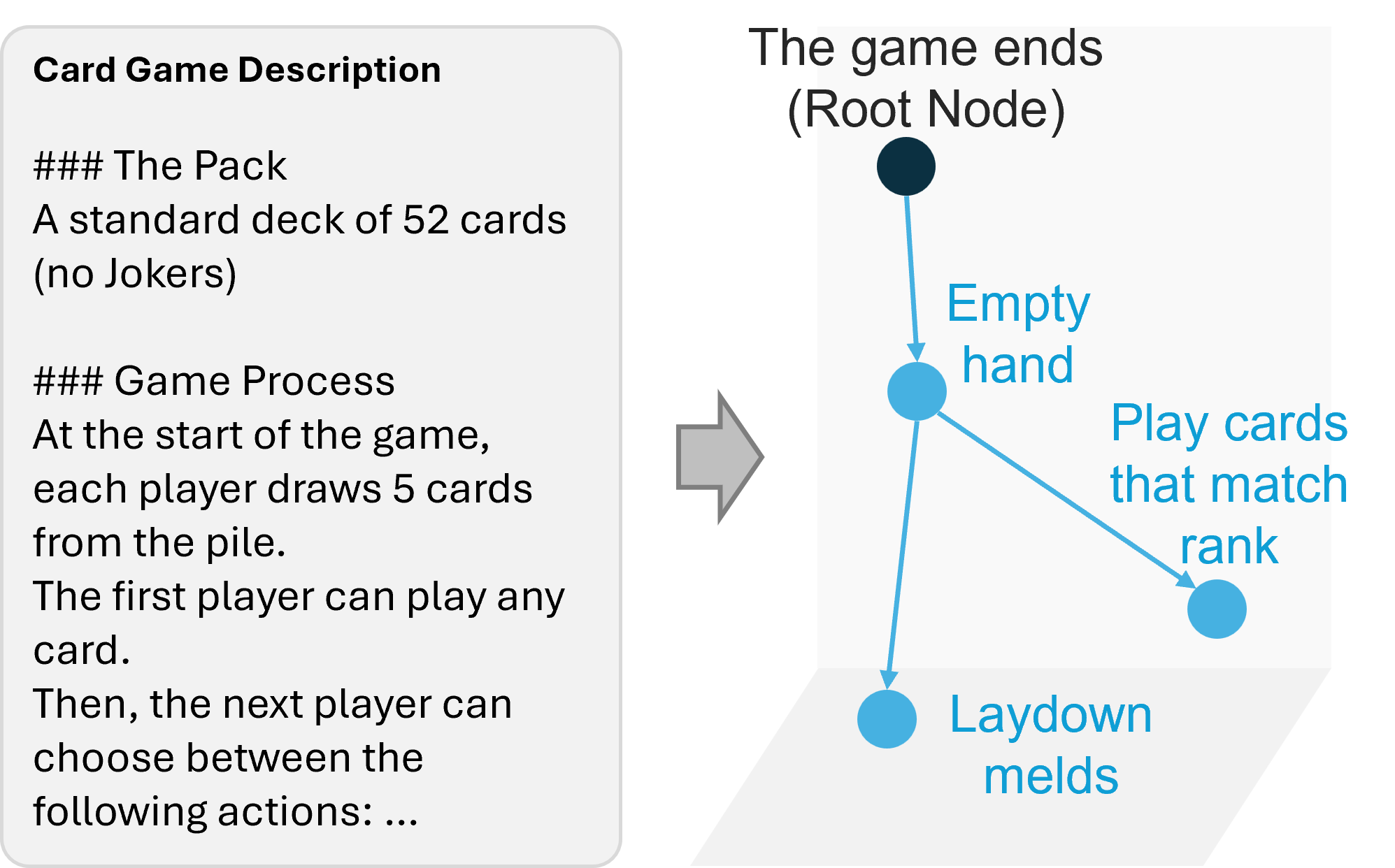
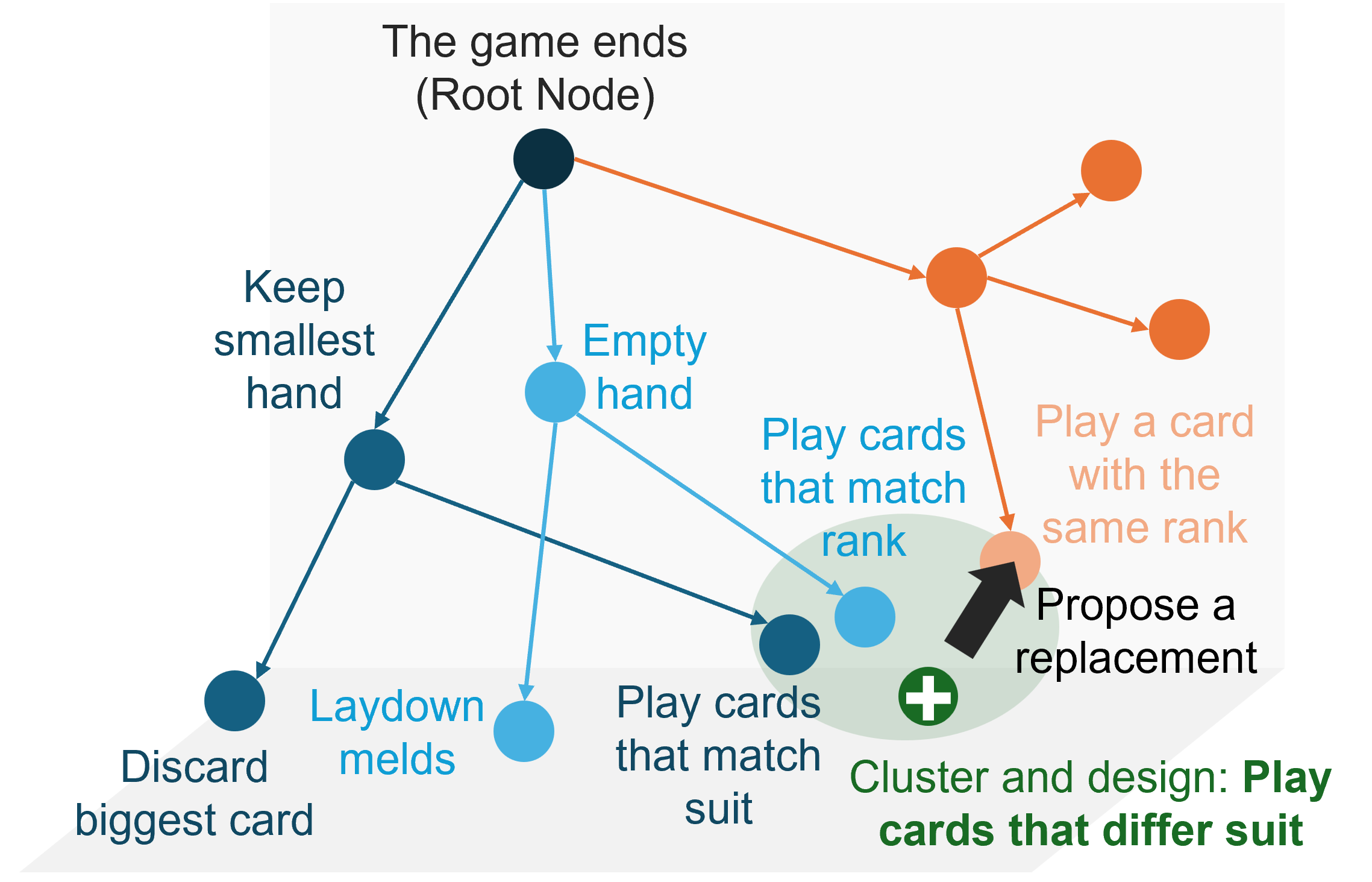
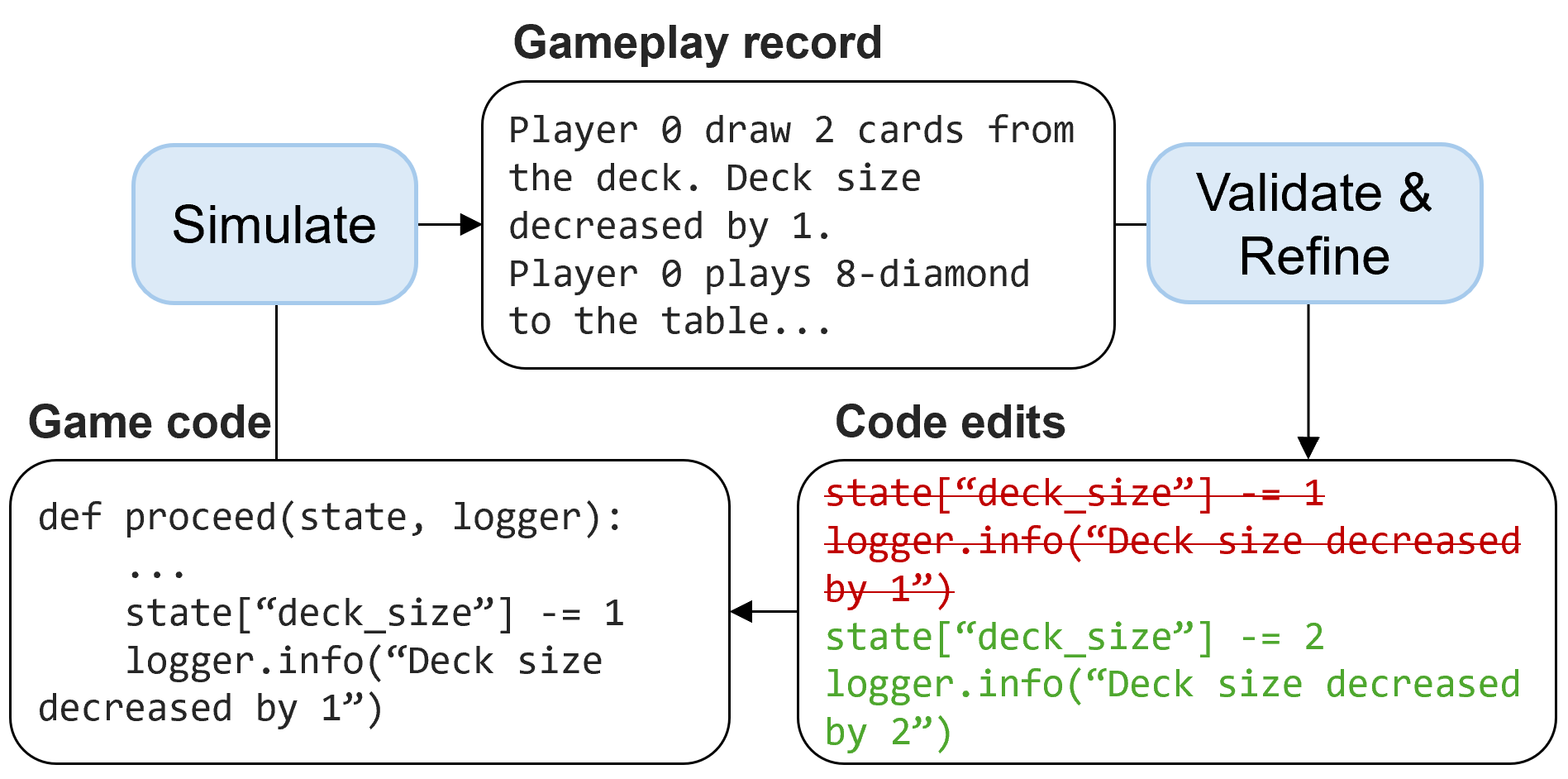
Cardiverse uses an iterative refinement loop to align game environment to game description:
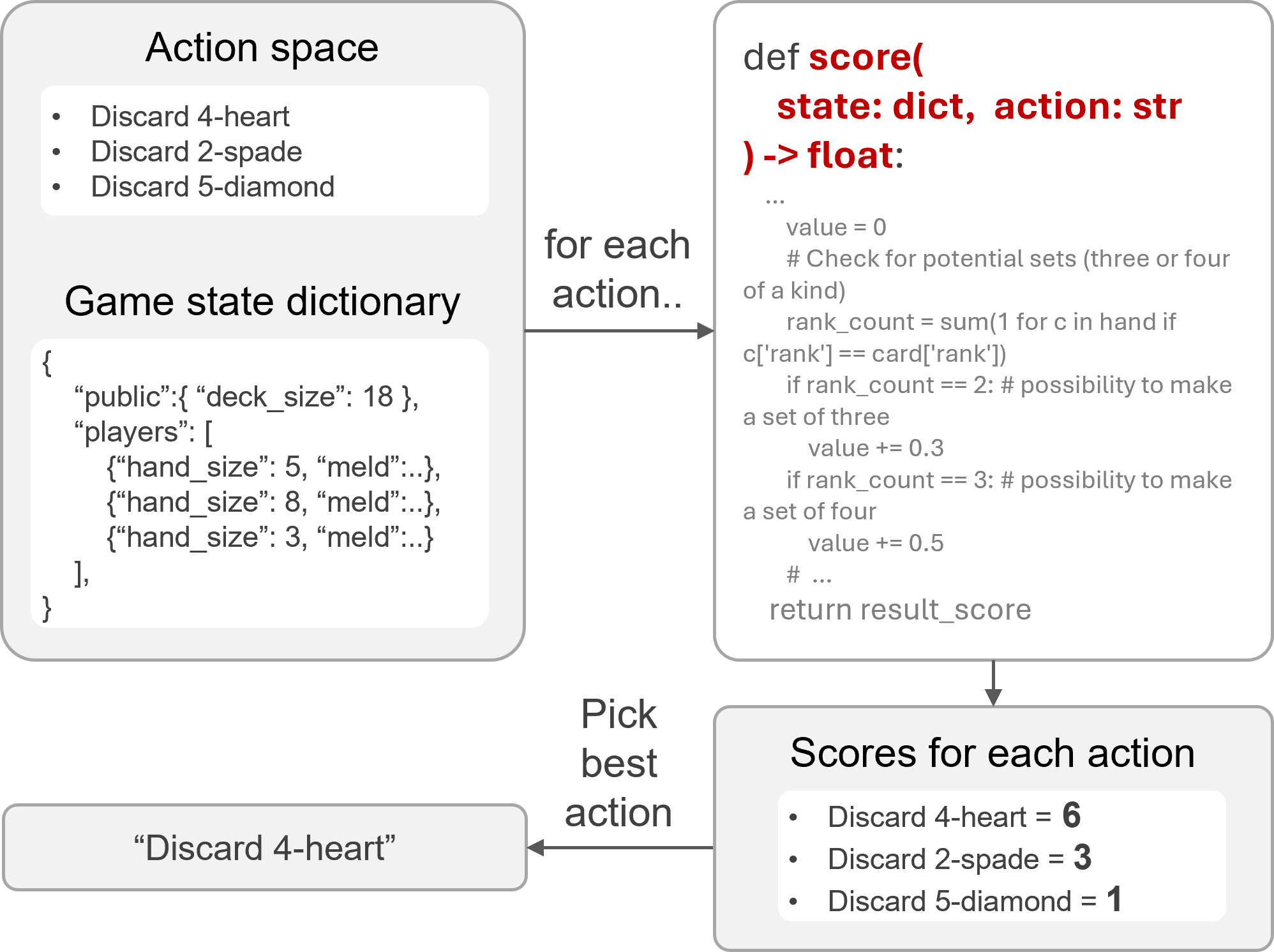
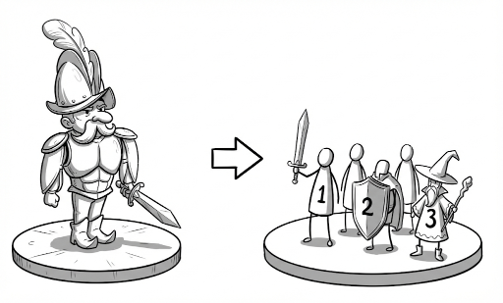
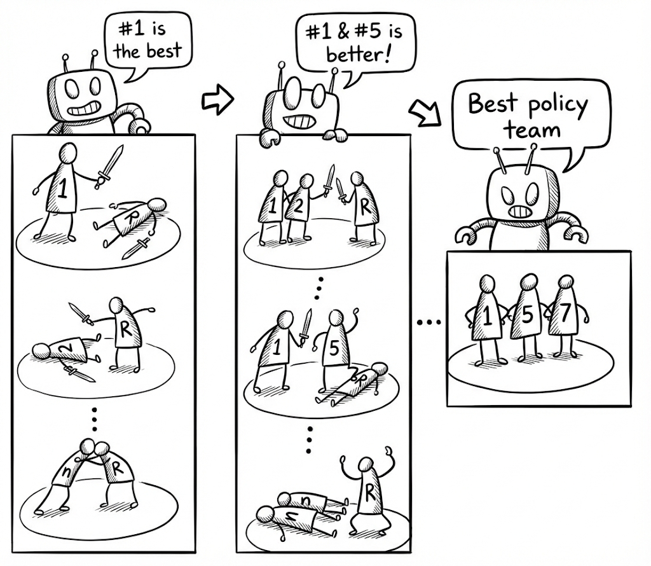
Try playing the demo game with Cardiverse-generated AI opponents! The source code for the demo game is available in the website branch of the Cardiverse GitHub repository.
@inproceedings{li-etal-2025-cardiverse,
    title = "Cardiverse: Harnessing {LLM}s for Novel Card Game Prototyping",
    author = "Li, Danrui  and
      Zhang, Sen  and
      Sohn, Samuel S.  and
      Hu, Kaidong  and
      Usman, Muhammad  and
      Kapadia, Mubbasir",
    editor = "Christodoulopoulos, Christos  and
      Chakraborty, Tanmoy  and
      Rose, Carolyn  and
      Peng, Violet",
    booktitle = "Proceedings of the 2025 Conference on Empirical Methods in Natural Language Processing",
    month = nov,
    year = "2025",
    address = "Suzhou, China",
    publisher = "Association for Computational Linguistics",
    url = "https://aclanthology.org/2025.emnlp-main.1511/",
    doi = "10.18653/v1/2025.emnlp-main.1511",
    pages = "29735--29762",
    ISBN = "979-8-89176-332-6"
}